Shea's Author Article Round Up

Looking for fresh insights to sharpen your craft and grow your readership? Explore Shea’s handpicked collection of articles, each offering practical tips and creative inspiration tailored to authors at every stage of the journey. From marketing strategies to storytelling techniques, you’ll find resources designed to spark ideas and move your writing career forward.

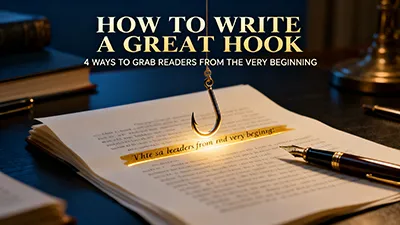
A fishhook hangs over open pages highlighted in yellow, with a fountain pen nearby. Large text reads, “How to Write a Great Hook: 4 Ways to Grab Readers from the Very Beginning.” Warm lighting creates a focused, inspiring atmosphere.
Using his grandmother’s carefully baited fishing hooks as a memorable analogy, Martin Wiles explains why writers must capture attention immediately and create questions readers want answered. He offers four practical benefits of strong hooks—from enticing audiences and strengthening book blurbs to attracting editors and encouraging repeat readers—making this a useful read for authors who want their openings to work harder.
At night on a winding path, one man holds a lantern, illuminating scattered handwritten pages trailing toward another man in the foreground. The scene is dim, with blue and orange contrasting tones and an emotional, mysterious atmosphere.
An impact character challenges the protagonist’s worldview, forcing meaningful choices that expose the story’s central conflict and drive transformation. This guide shows authors how to design one who does more than influence the plot—whether they catalyze growth, reinforce destructive beliefs, or reveal what the protagonist stands to lose.
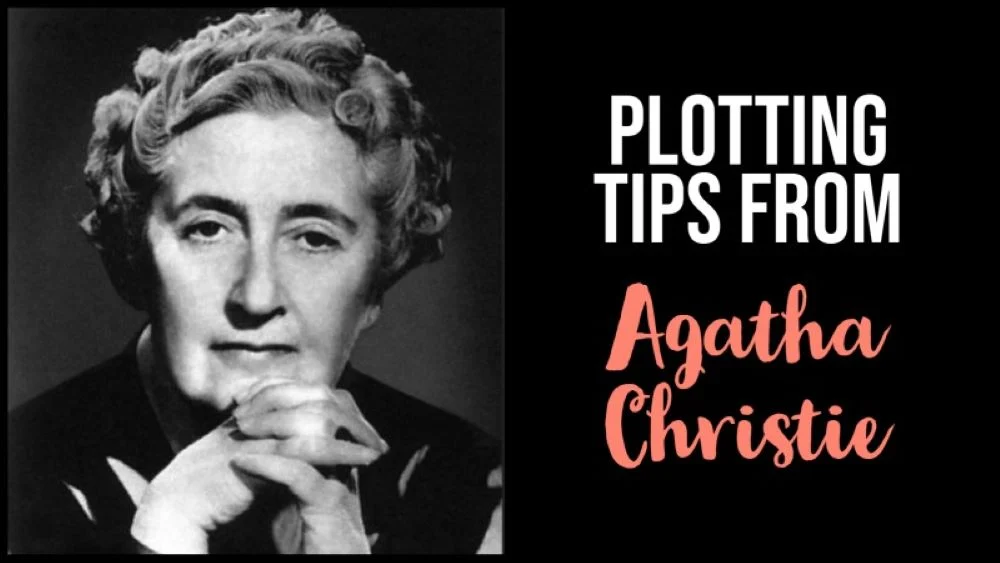
Black-and-white photo of an older woman with curled hair and hands under her chin. Beside her, white text reads “Plotting tips from” above “Agatha Christie” in pink script on a black background.
Agatha Christie’s enduring mysteries reveal seven practical plotting techniques, from planting fair clues and controlling information to using misdirection and carefully timed reversals. Writers seeking tighter suspense, more satisfying reveals, and endings that feel both surprising and earned will find clear lessons they can apply to their own stories.
Three men stand against a split blue and red background. The two on either side face away with heads bowed, while the central figure faces forward, smirking. In front, a cracked golden compass with chess pieces and arrows is prominently displayed.
Learn how antiheroes, antagonists, and villains differ by examining their motives, moral choices, and narrative roles—not simply whether they are likable or opposed to the protagonist. This concise guide can help you build sharper character conflicts and choose the right label for the forces driving your story.
A woman sits at a desk with books, papers, and a laptop, looking thoughtful. Papers list marketing tips. A sign reads, “The Biggest Signs Your Book Marketing Isn’t Working.” A whiteboard says “Book Marketing?” with checkboxes like Visibility and Engagement.
A struggling book launch may have less to do with the book itself than with weak targeting, unclear messaging, inconsistent visibility, or marketing efforts that cannot be measured. This practical guide helps authors spot the warning signs, identify where their promotion is losing momentum, and make smarter changes before wasting more time or money.
Memorable larger-than-life characters command attention through outsized personalities, powerful desires, exaggerated virtues and flaws, distinctive voices, and choices that reshape the people and events around them. This practical guide combines clear creation strategies with recognizable examples—from Jo March to Sherlock Holmes—to help authors make their characters vivid, consequential, and impossible to forget.

Writer’s block becomes an unexpected teacher, revealing how patience, curiosity, and a willingness to rethink one’s process can sharpen a storyteller’s craft. Authors seeking practical insight and encouragement will find a candid reflection on turning creative frustration into stronger, more intentional writing.
A person sits at a desk reading an open book, with scattered papers around. Three shadowy human figures and their shadows emerge from the book, suggesting imagination or storytelling. Warm lighting highlights the scene; bookshelves are visible in the background.
Writers can become trapped by a “default character”—a recurring figure shaped by their own emotional concerns—and miss literature’s chance to inhabit minds genuinely different from their own. This practical guide offers exercises for identifying that pattern, creating its opposite, and eventually building a complex character rooted in an unfamiliar conflict, making it valuable for authors seeking greater range, nuance, and creative freedom.
A closed maroon book sits on a tidy white desk beside a laptop displaying a book page. Two review cards, a stack of books, a lamp, and a mailer envelope are also on the desk. The setting suggests a quiet reading or book review workspace.
Kris Maze explains how a focused Goodreads Giveaway—rather than an exhausting mix of marketing tactics—helped introduce Parallel Lives – The Paths Not Taken to thousands of potential readers and generate strong prelaunch interest. With practical details on package costs, fulfillment, and results, the piece is especially useful for indie authors weighing whether Goodreads exposure, reviews, and “Want to Read” growth justify the investment.
Harlan Coben presents curiosity—especially the persistent question “What if?”—as the engine behind compelling fiction, showing how an ordinary promise can grow into a novel filled with conflict, guilt, and emotional stakes. He also argues that writers must stay mentally alert, seek varied experiences, and be ready to capture ideas whenever inspiration strikes, making Plot Twist useful for authors seeking practical ways to generate and develop story material.
A woman reads a large open book at a sunlit desk; colorful, glowing ribbons of blue, gold, and purple rise from the pages. A cup of tea and a notebook with a pen sit nearby, emphasizing a magical and creative atmosphere.
Drawing on neuroscience and practical writing strategies, the piece explains how flow can quiet self-doubt, reduce distractions, and help writers produce work with greater focus and ease. It’s worth reading if you want a clearer understanding of your inner critic—and concrete ways to create the mental conditions in which your strongest writing can emerge.
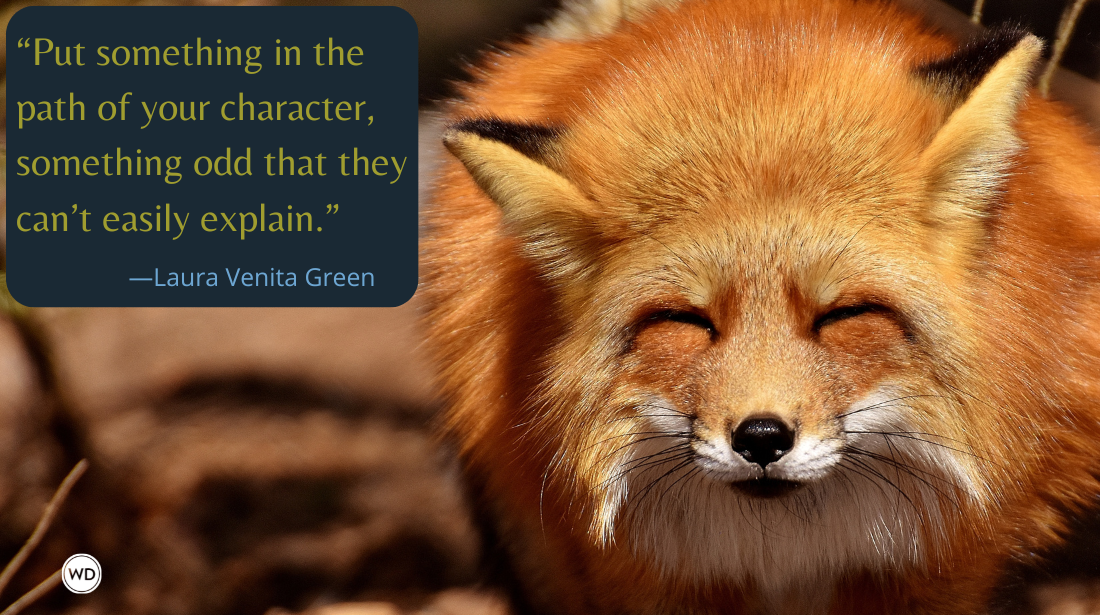
Laura Venita Green shows how to make small, ordinary lives feel expansive by giving characters a driving obsession and throwing in the weird, surprising, and delightfully human. Her four practical moves—obsession, odd encounters, juicy gossip, and borrowed texts/art—layer meaning so the story resonates far beyond the mundane.
Andrea Curtis makes a spirited case that research isn’t busywork but the spark that turns curiosities into connections, structure, and—eventually—a book. From childhood “look it up” habits to late-stage fact-checking, she shows how immersion widens possibility, sharpens ideas, and keeps nonfiction honest.
Veteran author Hank Quense argues that relying on AI too early can short-circuit the hard (and necessary) work of learning story craft—voice, character, structure, revision—leaving beginners with generic prose and shallow skills. He suggests mastering fundamentals first and treating AI, if used later, as a limited assist rather than a creative substitute.
Brand strategist Steve Brock breaks down how to move beyond a pretty logo to a clear, emotional promise that signals what’s uniquely you—from voice to the way you frame stories—so the right readers recognize you instantly. He also tackles the tightrope between genre expectations and personal distinctiveness, offering practical cues for branding every touchpoint of your author business.
Amazon is the “reach machine” with frictionless checkout and powerful discovery, but you don’t own the customer and algorithm swings can undercut control. Selling direct boosts margins, speeds payouts, and lets you own the relationship—so the smart play is often a hybrid: use Amazon for discovery and your own storefront for superfans and bundles.
“Impact” isn’t the whole truth behind writing a book—it often masks goals like credibility, audience growth, or simply keeping a promise to yourself. Using vivid examples of creators who publish freely, David Moldawer challenges authors to be honest about their motives and consider when ideas are better given away than sold.
Identity isn’t a slogan or six-word mantra—it’s a shifting interplay of yearning and resistance, conscious goals and shadow motives, that great fiction must surface and test on the page. Drawing on philosophy, psychology, and cultural snapshots, David Corbett shows practical ways to write characters who don’t fully know themselves—and how story reveals who they become.
A clear craft guide distinguishes women’s fiction from chick lit, then lays out four anchors for stronger stories: narrative voice, time period, emotional depth, and the resilience at the heart of women’s journeys. Examples from Austen to Atwood illustrate how these choices shape tone, stakes, and reader impact.
Brian Feinblum explains why many authors pour money into ads that don’t move the sales needle, then pinpoints the conditions where advertising can actually pay—clear audience targeting, compelling assets, strong social proof, and enough budget to test and learn. It’s a candid reality check with practical guidance to avoid waste and invest where visibility converts.
Greer Macallister answers the “why bother?” question with a craft-first case: even when splashy bestsellers aren’t paragons of prose, quality writing builds reader trust, word-of-mouth, and a career that lasts beyond a single launch. She offers pragmatic ways to aim higher—through revision, feedback, and patience—because the books that endure are the ones written well.
Packed with mindset shifts and simple systems, this piece shows busy writers how to shrink the barrier to starting—plan briefly, then begin—so words happen even on chaotic days. It favors short, repeatable sessions and low-friction habits that let your plan and draft “work together” to build momentum.
Educators and students band together in a new volume to share strategies for resisting censorship, from collective reading campaigns to lesson partnerships and library activism. Their voices offer both inspiration and practical tactics for authors, librarians, and teachers navigating a world where books are increasingly under siege.
Penny Sansevieri explains why earned media is a credibility multiplier—third-party validation that can out-perform ads and posts—and breaks down what makes an author “media-ready.” She offers concrete steps to land coverage, from crafting timely hooks and a solid platform to targeting tier-2/local outlets, pitching like a pro, and building momentum from each win.
Gabriella Batel shares a playful, practical approach to breaking through creative paralysis—treating “writing planks” as rigid habits you can loosen with small experiments, accountability, and intentional shifts in process. Framed by a new fiction project invite, her tips emphasize momentum over perfection so you can get words moving again.
Angela Shupe reflects on the winding path to her debut historical novel and distills four hard-won lessons—chief among them to follow the story that insists on being told. Drawing on Madeleine L’Engle’s maxim, she shows how patience, persistence, and trusting your material can carry a manuscript across years to the finish line.
If shouting into the social-media wind hasn’t sold your book, the fix isn’t “more noise” but clearer audience targeting, stronger messaging, and a repeatable plan that plays to your natural strengths. This piece reframes marketing as relationship-building—offering practical steps to focus your efforts, measure what matters, and create momentum.
Edie Melson makes the case that your email signature is “prime marketing real estate,” turning every message you send into a low-effort path to your website, books, newsletter, and socials. She lays out what to include (and avoid), reminds you to add the signature on all devices, and suggests modern extras like a signup link or scheduling URL.
This guide walks indie authors through the what, why, and how of marketing their books—covering strategies from metadata tweaks to using B&N’s free promotional tools. It illustrates how a smart, consistent approach to visuals, outreach, and platform leverage can turn a good book into a discoverable one.
The article curates nine provocative nuggets from Guillermo del Toro that encourage writers to own their darkness, trust their instincts, and treat “monsters” as essential elements of meaning. It argues that voice, obsession, and fearless creation—not rules—are what give stories life and resonance.
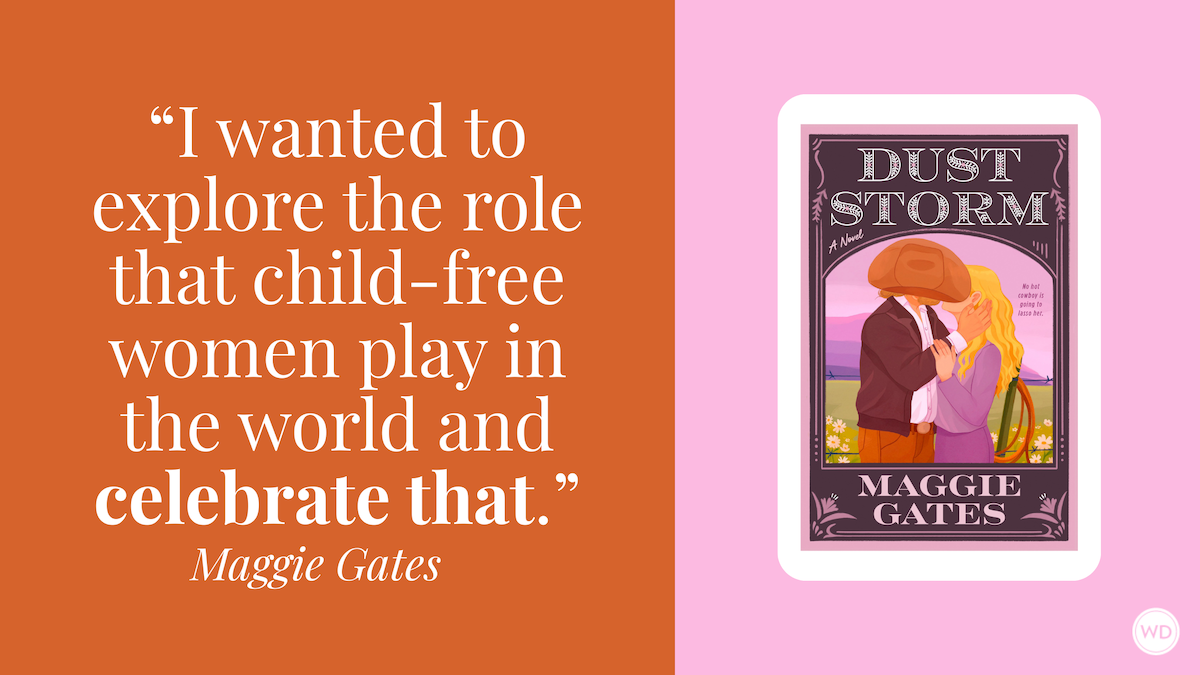
Maggie Gates traces her bold leap from self-publishing to signing with a traditional press, revealing how her romance Dust Storm found new wings through indie grit and publisher support. She offers a real-world view of the tradeoffs, surprises, and emotional reckoning behind that shift.
The author urges you to choose your angle consciously when writing life stories—whether you lean into confession, caution, curiosity, or clarity—because your tone shapes both the truth and its reception. She illustrates how subtle choices (voice, focus, framing) alter how much of your inner life is exposed or withheld.