Shea's Author Insight Round Up

Looking for fresh insights to sharpen your craft and grow your readership? Explore Shea’s handpicked collection of articles, videos, and other content, each offering practical tips and creative inspiration. From marketing strategies to storytelling techniques, you’ll find resources designed to spark ideas and move your writing career forward.

Close-up of a person’s face, slightly blurred, with their index finger held to their lips in a “shushing” gesture, suggesting silence or secrecy. The background is dark and out of focus.
Stories become more compelling when they conceal crucial truths, letting readers sense that something is missing as characters struggle with secrets, lies, and self-deception. This useful guide examines how to plant hidden information, control reveals, and turn withheld knowledge into tension that deepens character, plot, and emotional impact.
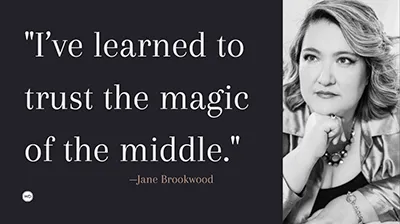
Black-and-white image with a quote: “I’ve learned to trust the magic of the middle.” —Jane Brookwood. Beside the quote is a woman with short hair, resting her chin on her hand, wearing a light jacket and a bracelet, looking thoughtful.
A reflective guide to transforming unresolved threads, overlooked details, and seemingly minor narrative loose ends into meaningful sources of tension, connection, and emotional payoff. Authors will find practical inspiration for turning unfinished business into story lifelines that deepen character arcs and keep readers invested.
A collage shows: a silhouetted pair facing each other, a person before a white building, someone looking in a mirror, a stormy sea, a person at a fork in the road, and an erupting volcano, all suggesting moments of decision or self-reflection.
Learn how the four classic conflict types—person versus self, person versus person, person versus society, and person versus nature—create pressure, shape character, and drive a story forward. This useful overview can help writers diagnose weak plots, choose conflicts that fit their themes, and build tension with greater purpose.
A group of yellow rubber ducks surrounds a single pink rubber duck with a green beak, making the pink duck stand out in the crowd. The image is bright and colorful, emphasizing the uniqueness of the pink duck among the yellow ones.
Memoir’s power comes from the author’s distinctive cadence, contradictions, sensory details, and hard-won perspective—qualities that generic AI-generated prose can easily smooth away. This piece offers a timely case for using AI as a careful tool rather than a substitute for lived experience, helping writers protect the voice that makes their story unmistakably theirs.
A split image: left side shows old papers, a pocket watch, pen, and map on a wooden desk; right side shows a modern laptop, lamp, glasses, and papers on a white desk. A thick rope curves across both desks, connecting the two scenes.
Learn how to braid two timelines into a single compelling story, using carefully controlled reveals, meaningful parallels, and escalating tension to keep readers invested in both past and present. The guidance is especially useful for authors who want to avoid confusion, make time shifts feel purposeful, and ensure the timelines converge in an emotionally satisfying way.
A bald man in a gray shirt gestures while sitting at a desk. Large text behind him reads “GET MORE READERS.” An orange play button icon is overlaid in the center, indicating this is a video thumbnail.
A practical three-part system—an irresistible reader magnet, a fast and focused author website, and consistent pathways from books, social media, and ads—turns casual visitors into an owned email audience. Authors will find concrete examples, landing-page guidance, and low-cost tactics they can use to build lasting reader relationships without chasing every new platform or marketing idea.
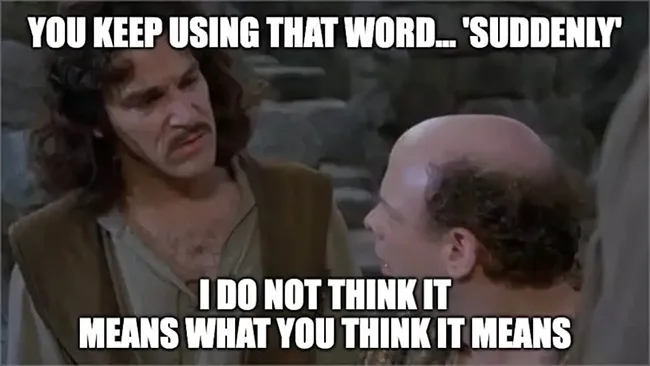
Two men from “The Princess Bride” movie converse. White text on top reads, “YOU KEEP USING THAT WORD... ‘SUDDENLY’.” Bottom text says, “I DO NOT THINK IT MEANS WHAT YOU THINK IT MEANS.”.
Strong writing gains power by replacing filler, hedging, repetition, and vague language with precise verbs, concrete details, and direct sentence structures. This practical editing guide gives authors a searchable checklist—from adverbs and passive constructions to nominalizations, weak adjectives, dialogue tags, and throat-clearing phrases—along with a manageable, category-by-category method for tightening a manuscript.

A person sits at a desk studying, with a bright path of light from their work stretching onto a racetrack, blending lane 4 into a sunlit horizon, symbolizing knowledge leading to future goals. Books and papers are on the desk and ground.
Self-doubt can make writers mistake temporary frustration for a lack of talent, but stronger writing usually comes from practice, revision, and learning to recognize what is already working. This piece offers an encouraging shift in perspective for authors who want practical reassurance and a healthier, more productive approach to improving their craft.
A dark wooden desk with a closed book in the center, several upright books against the wall, and a black desk lamp casting a warm light on the desk’s surface. The wall behind is blue, and the atmosphere feels quiet and studious.
Learn how to recognize whether your novel’s story, characters, and unresolved tensions naturally call for sequels—or whether they are best shaped into a satisfying standalone. The guidance helps authors weigh creative, structural, and publishing considerations before committing to a series, making it useful for anyone unsure how far their fictional world should continue.
Illustration of a desk with a laptop displaying “Author,” a notebook with a pen, a second pen, an orange desk lamp, and a chair. Browser window, message, and email icons float in the background. The scene is in blue, orange, and cream tones.
An author’s online presence starts with a focused, professional foundation that makes it easy for readers, industry contacts, and potential collaborators to find and trust them. The guidance is especially useful for writers who feel overwhelmed by platforms and promotion, offering practical first steps without demanding a polished, all-encompassing brand from day one.
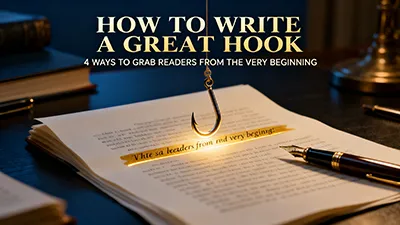
A fishhook hangs over open pages highlighted in yellow, with a fountain pen nearby. Large text reads, “How to Write a Great Hook: 4 Ways to Grab Readers from the Very Beginning.” Warm lighting creates a focused, inspiring atmosphere.
Using his grandmother’s carefully baited fishing hooks as a memorable analogy, Martin Wiles explains why writers must capture attention immediately and create questions readers want answered. He offers four practical benefits of strong hooks—from enticing audiences and strengthening book blurbs to attracting editors and encouraging repeat readers—making this a useful read for authors who want their openings to work harder.
At night on a winding path, one man holds a lantern, illuminating scattered handwritten pages trailing toward another man in the foreground. The scene is dim, with blue and orange contrasting tones and an emotional, mysterious atmosphere.
An impact character challenges the protagonist’s worldview, forcing meaningful choices that expose the story’s central conflict and drive transformation. This guide shows authors how to design one who does more than influence the plot—whether they catalyze growth, reinforce destructive beliefs, or reveal what the protagonist stands to lose.
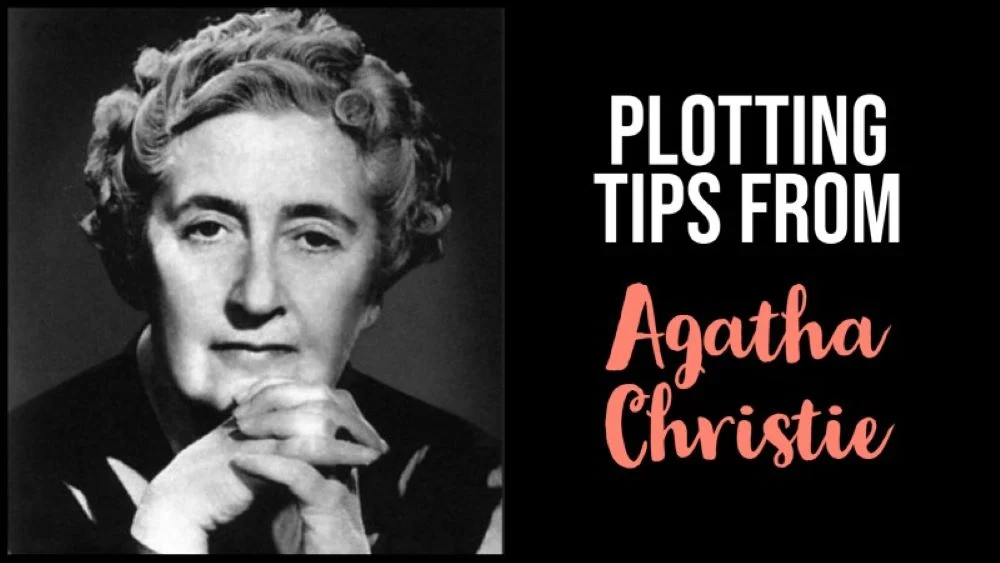
Black-and-white photo of an older woman with curled hair and hands under her chin. Beside her, white text reads “Plotting tips from” above “Agatha Christie” in pink script on a black background.
Agatha Christie’s enduring mysteries reveal seven practical plotting techniques, from planting fair clues and controlling information to using misdirection and carefully timed reversals. Writers seeking tighter suspense, more satisfying reveals, and endings that feel both surprising and earned will find clear lessons they can apply to their own stories.
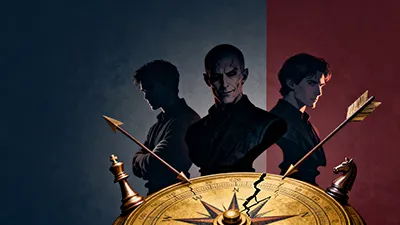
Three men stand against a split blue and red background. The two on either side face away with heads bowed, while the central figure faces forward, smirking. In front, a cracked golden compass with chess pieces and arrows is prominently displayed.
Learn how antiheroes, antagonists, and villains differ by examining their motives, moral choices, and narrative roles—not simply whether they are likable or opposed to the protagonist. This concise guide can help you build sharper character conflicts and choose the right label for the forces driving your story.
A woman sits at a desk with books, papers, and a laptop, looking thoughtful. Papers list marketing tips. A sign reads, “The Biggest Signs Your Book Marketing Isn’t Working.” A whiteboard says “Book Marketing?” with checkboxes like Visibility and Engagement.
A struggling book launch may have less to do with the book itself than with weak targeting, unclear messaging, inconsistent visibility, or marketing efforts that cannot be measured. This practical guide helps authors spot the warning signs, identify where their promotion is losing momentum, and make smarter changes before wasting more time or money.
Memorable larger-than-life characters command attention through outsized personalities, powerful desires, exaggerated virtues and flaws, distinctive voices, and choices that reshape the people and events around them. This practical guide combines clear creation strategies with recognizable examples—from Jo March to Sherlock Holmes—to help authors make their characters vivid, consequential, and impossible to forget.
Writer’s block becomes an unexpected teacher, revealing how patience, curiosity, and a willingness to rethink one’s process can sharpen a storyteller’s craft. Authors seeking practical insight and encouragement will find a candid reflection on turning creative frustration into stronger, more intentional writing.
A person sits at a desk reading an open book, with scattered papers around. Three shadowy human figures and their shadows emerge from the book, suggesting imagination or storytelling. Warm lighting highlights the scene; bookshelves are visible in the background.
Writers can become trapped by a “default character”—a recurring figure shaped by their own emotional concerns—and miss literature’s chance to inhabit minds genuinely different from their own. This practical guide offers exercises for identifying that pattern, creating its opposite, and eventually building a complex character rooted in an unfamiliar conflict, making it valuable for authors seeking greater range, nuance, and creative freedom.
A closed maroon book sits on a tidy white desk beside a laptop displaying a book page. Two review cards, a stack of books, a lamp, and a mailer envelope are also on the desk. The setting suggests a quiet reading or book review workspace.
Kris Maze explains how a focused Goodreads Giveaway—rather than an exhausting mix of marketing tactics—helped introduce Parallel Lives – The Paths Not Taken to thousands of potential readers and generate strong prelaunch interest. With practical details on package costs, fulfillment, and results, the piece is especially useful for indie authors weighing whether Goodreads exposure, reviews, and “Want to Read” growth justify the investment.
Harlan Coben presents curiosity—especially the persistent question “What if?”—as the engine behind compelling fiction, showing how an ordinary promise can grow into a novel filled with conflict, guilt, and emotional stakes. He also argues that writers must stay mentally alert, seek varied experiences, and be ready to capture ideas whenever inspiration strikes, making Plot Twist useful for authors seeking practical ways to generate and develop story material.
A woman reads a large open book at a sunlit desk; colorful, glowing ribbons of blue, gold, and purple rise from the pages. A cup of tea and a notebook with a pen sit nearby, emphasizing a magical and creative atmosphere.
Drawing on neuroscience and practical writing strategies, the piece explains how flow can quiet self-doubt, reduce distractions, and help writers produce work with greater focus and ease. It’s worth reading if you want a clearer understanding of your inner critic—and concrete ways to create the mental conditions in which your strongest writing can emerge.
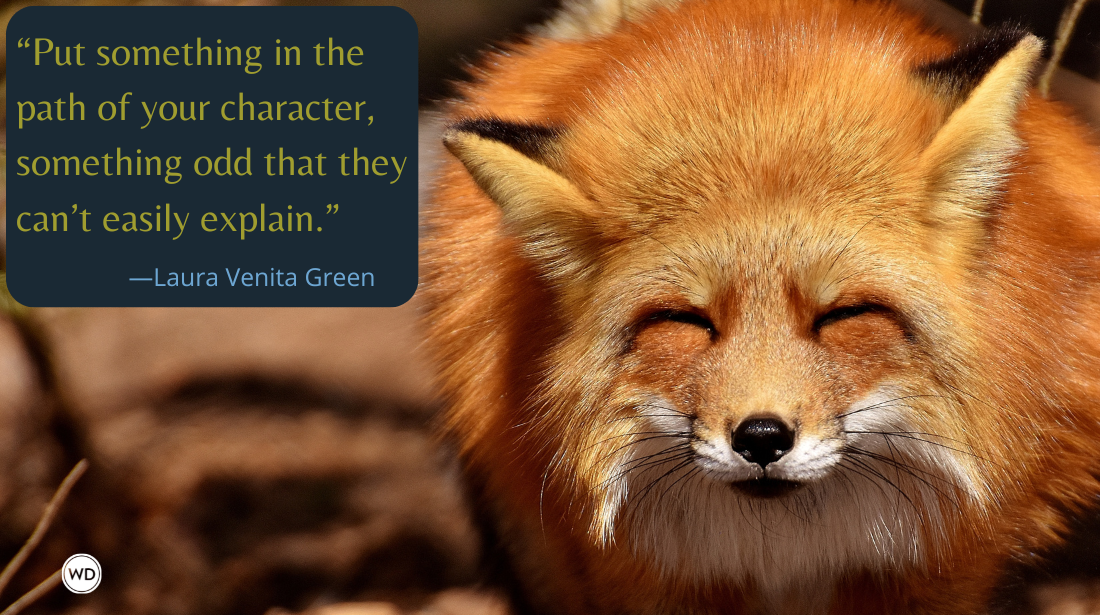
Laura Venita Green shows how to make small, ordinary lives feel expansive by giving characters a driving obsession and throwing in the weird, surprising, and delightfully human. Her four practical moves—obsession, odd encounters, juicy gossip, and borrowed texts/art—layer meaning so the story resonates far beyond the mundane.
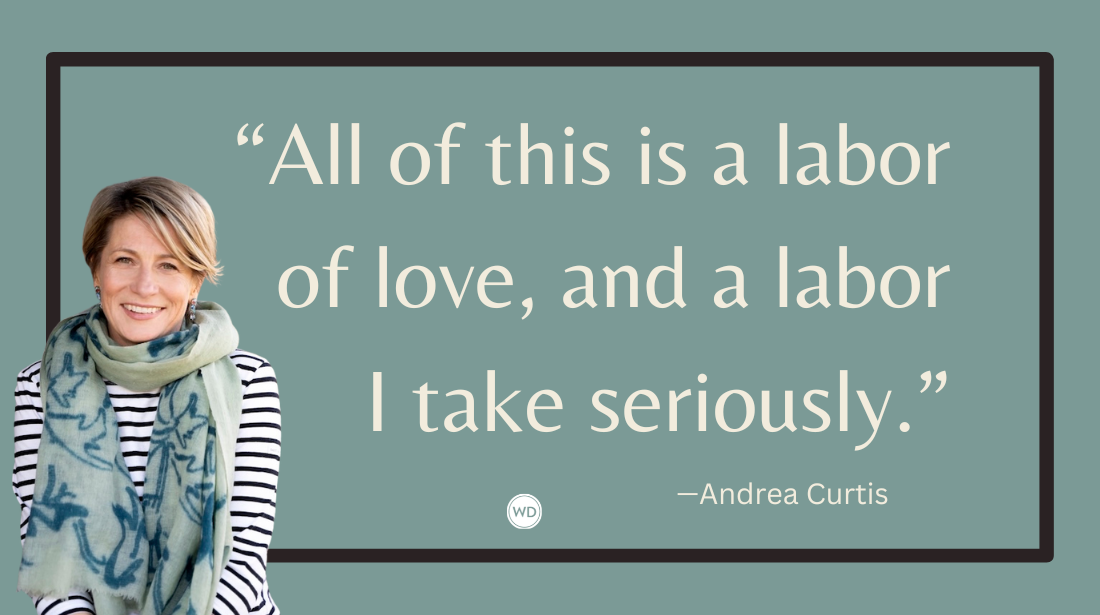
Andrea Curtis makes a spirited case that research isn’t busywork but the spark that turns curiosities into connections, structure, and—eventually—a book. From childhood “look it up” habits to late-stage fact-checking, she shows how immersion widens possibility, sharpens ideas, and keeps nonfiction honest.
Veteran author Hank Quense argues that relying on AI too early can short-circuit the hard (and necessary) work of learning story craft—voice, character, structure, revision—leaving beginners with generic prose and shallow skills. He suggests mastering fundamentals first and treating AI, if used later, as a limited assist rather than a creative substitute.
Brand strategist Steve Brock breaks down how to move beyond a pretty logo to a clear, emotional promise that signals what’s uniquely you—from voice to the way you frame stories—so the right readers recognize you instantly. He also tackles the tightrope between genre expectations and personal distinctiveness, offering practical cues for branding every touchpoint of your author business.
Amazon is the “reach machine” with frictionless checkout and powerful discovery, but you don’t own the customer and algorithm swings can undercut control. Selling direct boosts margins, speeds payouts, and lets you own the relationship—so the smart play is often a hybrid: use Amazon for discovery and your own storefront for superfans and bundles.
“Impact” isn’t the whole truth behind writing a book—it often masks goals like credibility, audience growth, or simply keeping a promise to yourself. Using vivid examples of creators who publish freely, David Moldawer challenges authors to be honest about their motives and consider when ideas are better given away than sold.
Identity isn’t a slogan or six-word mantra—it’s a shifting interplay of yearning and resistance, conscious goals and shadow motives, that great fiction must surface and test on the page. Drawing on philosophy, psychology, and cultural snapshots, David Corbett shows practical ways to write characters who don’t fully know themselves—and how story reveals who they become.
A clear craft guide distinguishes women’s fiction from chick lit, then lays out four anchors for stronger stories: narrative voice, time period, emotional depth, and the resilience at the heart of women’s journeys. Examples from Austen to Atwood illustrate how these choices shape tone, stakes, and reader impact.
Brian Feinblum explains why many authors pour money into ads that don’t move the sales needle, then pinpoints the conditions where advertising can actually pay—clear audience targeting, compelling assets, strong social proof, and enough budget to test and learn. It’s a candid reality check with practical guidance to avoid waste and invest where visibility converts.
Greer Macallister answers the “why bother?” question with a craft-first case: even when splashy bestsellers aren’t paragons of prose, quality writing builds reader trust, word-of-mouth, and a career that lasts beyond a single launch. She offers pragmatic ways to aim higher—through revision, feedback, and patience—because the books that endure are the ones written well.
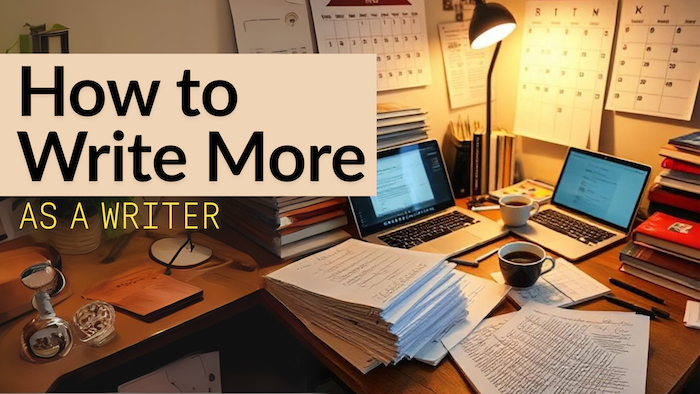
Packed with mindset shifts and simple systems, this piece shows busy writers how to shrink the barrier to starting—plan briefly, then begin—so words happen even on chaotic days. It favors short, repeatable sessions and low-friction habits that let your plan and draft “work together” to build momentum.