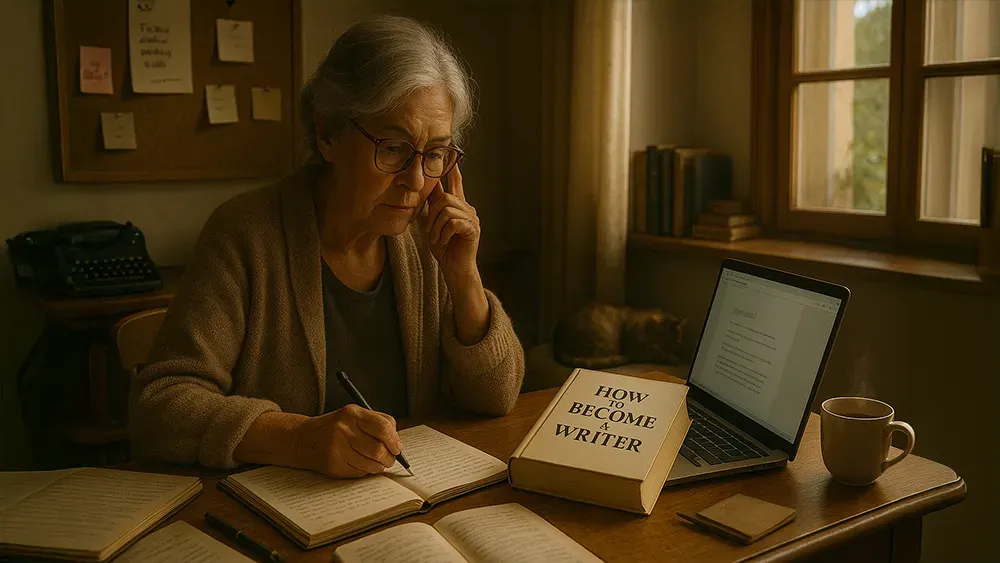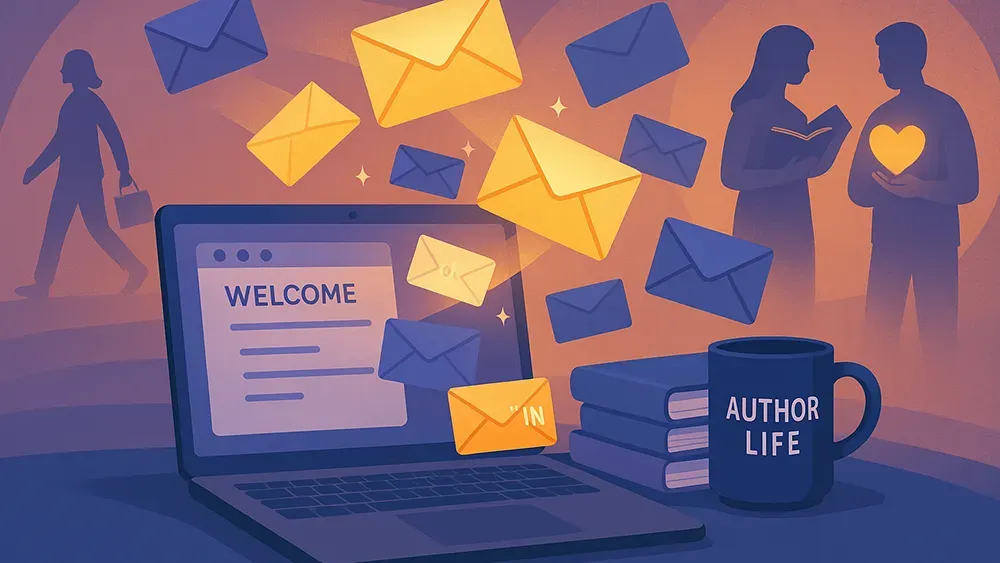

Why is email marketing still the most powerful tool for authors in 2025? With the rise of social media, video, and countless new platforms, email might seem like an old standby. Yet email remains a secret weapon for writers as part of their marketing plan.
In fact, all the research shows that email provides the closest connection to your readers – people scroll quickly through social feeds, but engage much more deeply with an email in their inbox. As one expert put it: “Email is simply the most effective marketing tool out there” for authors.
Unlike a tweet or Facebook post, an email reaches your reader directly and doesn’t disappear in a crowded feed. It’s a communication channel you truly own, one that algorithm changes or platform whims can’t undermine.
And yes – despite predictions of its demise, “email is not dead”. It’s very much alive and delivering outstanding results for those who use it well.
In this comprehensive guide, we’ll explore why building an author email marketing list is so crucial for authors, especially indie authors looking to grow an audience.
We’ll cover the big-picture benefits of email versus social media, including recent statistics on open rates and reader engagement.
Then we’ll get practical with step-by-step strategies to build your list – from reader magnets and sign-up forms to group promotions and social media tactics (including tools like BookFunnel and Prolific Works).
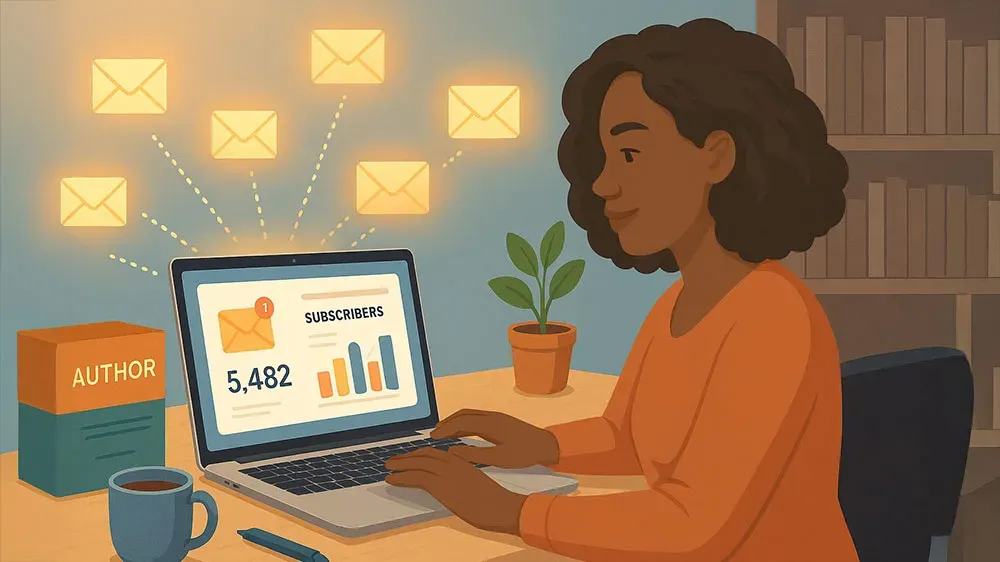
Why Authors Need an Email Marketing List
A newsletter list isn’t just “nice to have” – it’s often overwhelmingly more effective than social media for reaching readers.
The reason is simple: when someone subscribes to your newsletter, they want to hear from you, and your message lands in a place people check every day (their inbox). On social media, by contrast, even your biggest fans might never see your posts due to fleeting algorithms.
Consider this: email open rates average around 15–25%, whereas organic social media posts often reach only 2–4% of your followers. In other words, emailing 1,000 fans could get your news in front of 200–300 people, while a social post to 1,000 followers might be seen by only a few dozen.
It’s no surprise, then, that successful authors see email as more personal, reliable, and actionable than other channels. It’s a critical step in your path to becoming a successful writer.
Long-term Ownership and Control
Long-term ownership and control are the most significant advantages of email for your author platform. With a newsletter, you’re not dependent on algorithms, platform policies, or the sudden whims of a third-party company. If a social platform changes its rules, suspends your account, or gets hacked, you could lose your entire audience overnight. An email list, on the other hand, belongs to you.
It’s portable across different email services, and no one can limit your ability to reach the readers who’ve chosen to hear from you.
This sense of ownership gives authors stability and freedom to build lasting relationships with their audience. Every email address on your list is a long-term asset, one that becomes more valuable as you nurture it.
By treating subscribers with respect and providing consistent value, you’re not just safeguarding your reach—you’re cultivating trust and loyalty that compound over time.
Email Converts Better When It Comes To Getting Readers To Take Action
Email consistently outperforms other channels when it comes to getting readers to take action—whether that means buying your new book, leaving a review, or signing up for an event.
An active buy link in a newsletter, sent directly to people who genuinely want to hear from you, is one of the most effective ways to drive book sales.
Your subscribers are often your most engaged and enthusiastic readers, which makes them far more likely to click your links or respond to your calls-to-action than a casual follower on social media.
The numbers back this up. Industry research shows email marketing delivers an average return of $36–$42 for every $1 spent, which is dramatically higher than the ROI for social media.
Even if you’re not investing money into your author newsletter, this statistic highlights just how valuable email can be in driving meaningful results. And it’s not just about sales—emails regularly achieve higher click-through and conversion rates across the board, making them a reliable tool for building momentum and strengthening reader relationships.
Email Is More Intimate And Relationship-Driven
Email is a far more intimate and relationship-driven medium, which makes it especially powerful for authors who want to build a loyal fanbase.
Social media can spread your message quickly, but it’s crowded and impersonal—a public stage where your voice competes with countless others. Email, in contrast, feels like a private conversation. It gives you the space to share more than a fleeting caption, offering readers a glimpse into your personality, process, and world in a way that feels authentic and personal.
Over time, this sense of connection helps build the all-important “know, like, and trust” factor with your audience. Readers who feel like they know you through your stories, insights, and regular communication are the ones who become superfans—eager not just to buy your books but to recommend them to others.
When you focus on engagement first and sales second, your email list evolves into a thriving community. The sales come naturally as a by-product of the healthy, ongoing relationships you’ve built with your readers.
Your Email List is Your Future
It’s worth highlighting a few recent statistics that underscore email’s power in 2025. Globally, more than 4.4 billion people use email—a number that continues to grow and is expected to reach 5 billion within just a couple of years.
A striking 88% of people check their email daily, and in the U.S., nearly 8 in 10 start their day by opening their inbox. That means your newsletter has the potential to greet readers right alongside their morning coffee.
And unlike the split-second glance given to a tweet or post, people often spend eight seconds or more reading an email, with 61% of users giving at least that much attention. In internet time, that’s an eternity—and a real chance to leave an impression. It’s no surprise, then, that surveys of authors consistently show most rely on newsletters because of the direct connection and reliability they provide.
Email avoids the frustrations of shifting algorithms and puts the author in charge of the relationship. Many industry experts go so far as to call an author email marketing list the single most effective way to grow and reach a fan base.
For authors—especially indies charting their own course—building an email list is a long-term investment that can pay dividends for an entire career.
If you feel hesitation about diving in, you’re not alone. Some authors worry that email feels spammy, or they’re overwhelmed by the idea of managing a list. But when done right, digital promotion is not about shouting “buy my book” into inboxes—it’s about permission-based, value-driven communication.
It’s an invitation for readers to join your world, not an intrusion. The difference comes down to approach: treat readers with respect, share stories and insights they’ll appreciate, and deliver consistent value. That’s when email transforms from a task on your author marketing to-do list into a powerful tool for building authentic relationships.
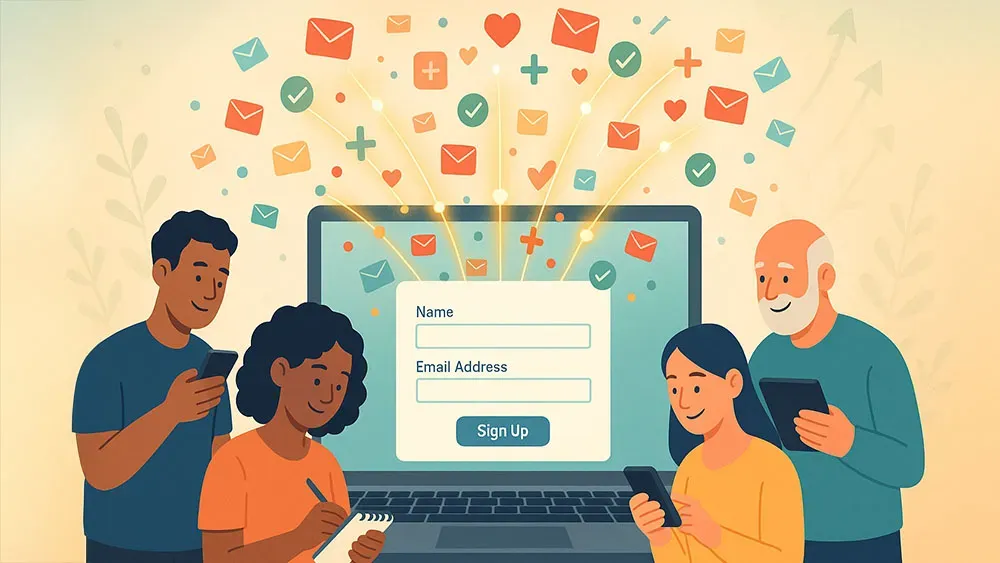
How to Build an Author Email Marketing List
You might be thinking, “Okay, I’m convinced – but how do I actually get subscribers for my author mailing list?” Building an email list from scratch can feel daunting, but it’s very achievable with consistent effort and smart strategies. Here are step-by-step methods to grow your list, even if you’re starting at zero:
1. Create an Irresistible Reader Magnet
One of the best ways to grow your author email marketing list is by offering a reader magnet—a freebie that readers receive in exchange for subscribing. The term was popularized by author Nick Stephenson, and it’s become one of the most powerful list-building strategies for writers.
Your reader magnet should be something your audience values enough to trade their email address for. For fiction authors, that often means a free novella, short story, or bonus chapter tied to your existing books. For example, thriller author Mark Dawson attracts subscribers by giving away a free “starter library,” offering readers a taste of his work right away. If you write a series, consider offering a prequel story or a special side adventure with fan-favorite characters.
Nonfiction authors can craft magnets tailored to their audience’s needs—a practical guide, checklist, mini-ebook of tips, or even a recipe sampler if you write cookbooks. The key is that it must feel valuable and exclusive. It should be something readers can’t easily find for free elsewhere, especially not on Amazon.
Don’t be afraid to be generous. Many successful indie authors have grown their lists by giving away an entire book. As Ricardo Fayet of Reedsy points out, if a reader enjoys one book, they’re far more likely to become a lifelong fan (and paying customer) when they’re offered another for free. Think of it as a long-term investment: the short-term “loss” of a free book can lead to loyal fans who stick around for your future releases.
Once you’ve created your magnet, promote it everywhere. Feature it prominently on your website, include it in the front and back matter of all your books, mention it on social media, and highlight it in your author bios.
The goal is simple: whenever a reader stumbles across you, they should instantly see that a free, exclusive gift is waiting for them if they join your mailing list.
2. Make it Easy to Join Your Mailing List
If you want readers to subscribe, the process needs to be quick, simple, and impossible to miss. Your author website is the best place to start—it’s your online home, a space you control, and the first stop for people curious about you and your books.
Every author, published or not, should have at least a basic website or homepage, and front and center on that site should be an email sign-up form. Place it somewhere highly visible—near the top of your homepage, on your About page, or even in your site’s header or sidebar. A tasteful pop-up can also work well to grab attention without being intrusive.
The sign-up form should clearly explain the benefits of joining. Instead of a bland “Sign up for my newsletter,” make it enticing and specific: “Join my reader club to get a free novella and monthly behind-the-scenes updates.” Readers are much more likely to subscribe when they know exactly what they’ll receive.
In addition, create a dedicated landing page for your mailing list. This page can stand alone (either on your site or provided by your email service) and serve as a focused pitch for your newsletter.
You can link to it from social media, paid ads, or even inside your books. Many authors use navigation menu links like “Free Bonus Content,” “Join My VIP List,” or “Newsletter” to drive traffic directly to this signup page.
The idea is simple: make sure every path a reader might take—whether they find you via a Google search, social media, or after finishing your book—leads them toward your mailing list. The easier you make it, the more subscribers you’ll gain.
3. Integrate Your Books into Your List-Building Strategy
Your books aren’t just products—they’re also powerful tools for growing your email list. One of the most effective tactics is to include sign-up invitations directly inside your book, especially in the back matter. When a reader finishes your story and is most engaged, that’s the perfect moment to invite them to stay connected. A simple message like:
“Enjoyed this story? Get a free bonus epilogue (plus future updates from me) when you subscribe at [your link]!”
This small step can pay off in a big way. In fact, surveys show that about 75% of authors gain new subscribers through links in their eBook back matter.
Don’t stop there—add the invitation to the front matter too. That way, even readers who are only sampling your book through Amazon’s “Look Inside” feature will see there’s a freebie waiting for them if they join your list. You can also work the offer into your author bio or introduction with a line like, “Sign up for my newsletter for updates and a free story.”
For print editions, you obviously can’t use clickable links, but you can still include your signup URL. Many readers will type it in if they’re eager for bonus content or updates.
The key is to treat every book as a gateway to your email list. Make the invitation clear, easy to find, and valuable enough that readers will take that extra step. The easier you make it, the faster your subscriber base will grow.
4. Promote Your Author Email Marketing List on Social Media and Other Channels
The simplest way to grow your list? Ask people to join. Don’t assume readers will stumble across your signup form—you need to actively point them to it. Social media is the perfect place to do this, since that’s where many of your fans are already following you.
Share regular posts inviting people to subscribe. You can frame them in different ways:
- Build urgency: “Newsletter goes out tomorrow—sign up now to get a sneak peek of my WIP!”
- Highlight exclusivity: “Get my free short story—only available to subscribers.”
- Show the value: “In this week’s email, I shared three book recommendations and an update on my next novel. Don’t miss out—subscribe here!”
Marketing expert Kirsten Oliphant even suggests teasing each newsletter before it goes out to spark FOMO for non-subscribers.
Make your calls-to-action easy to find. Pin a post with your signup link to the top of your Twitter/X and Facebook profiles. Update your bios to include a direct link to your landing page instead of just your homepage. On Instagram or TikTok, where you get only one bio link, use a link-in-bio tool or a landing page that prominently features your mailing list. You can even tailor the page to each platform (e.g., “Hey Instagram friends! Here’s why you’ll love my newsletter…”).
And don’t forget offline opportunities. If you attend book signings, readings, workshops, or conferences, always have a way for people to subscribe—whether that’s a paper signup sheet, a business card drop, or a tablet where attendees can enter their email. Some authors even mention it directly during events: “If you’d like a free story and updates, just add your name to my list before you leave.”
The key idea: anywhere readers are paying attention to you—online or in person—is a chance to funnel them into your email list.
5. Carefully Leverage Giveaways and Group Promotions
One of the fastest ways to supercharge your email list is through multi-author giveaways and promotions—often run through platforms like BookFunnel, Prolific Works, or StoryOrigin. These campaigns typically involve a group of authors in the same genre pooling their efforts to offer a big prize—say, “Win a bundle of 20 fantasy ebooks and a Kindle.”
Readers enter by providing their email address (and agreeing to be added to each author’s list). A well-run promotion can add hundreds, even thousands, of new subscribers to your list in a matter of weeks.
The upside is obvious: rapid growth, exposure to new readers, and the chance to cross-promote with fellow authors. Some indie authors credit these campaigns with helping them hit bestseller lists by launching to a much larger audience. Even bestselling poet Rupi Kaur has used weekly giveaways as a subscriber incentive.
But there’s a catch. Many participants in large giveaways are “freebie seekers”—people who want the Kindle or the Amazon gift card, not your books. One author reported that nearly 75% of giveaway-sourced subscribers never opened the welcome email offering her free book. High unsubscribe or spam-complaint rates can even hurt your sender reputation or trigger warnings from your email service provider.
So, how do you protect yourself?
- Segment your list. Keep giveaway subscribers in a separate group at first. Send them a special welcome series to introduce yourself and your work. Those who stay engaged can later be merged into your main list.
- Prioritize book-related prizes. A giveaway offering “50 bestselling mystery novels” will attract mystery readers. A contest for an iPad will attract… well, everyone (most of whom don’t care about your genre). The closer the prize is to your niche, the better quality your subscribers will be.
- Be ready to clean house. Monitor open rates and engagement. Don’t hesitate to remove inactive subscribers—it’s better to have a smaller, healthier list than a bloated one full of unengaged “zombies.”
In short, giveaways, group promotions and book promotions can be an excellent supplement to your list-building toolkit—but use them with caution and be sure to think through how they might impact your pricing strategy. Focus on quality over quantity, and always follow up with a strong welcome sequence to turn casual entrants into true fans.
6. Welcome New Subscribers and Follow the Rules
The moment someone joins your list is crucial—it’s your chance to make a strong first impression and confirm that they really did want to hear from you. That’s why every author should set up an automatic welcome email that goes out immediately (or within 24 hours) of signup.
At minimum, your welcome email should:
- Thank them for subscribing.
- Deliver the promised freebie (with clear download instructions if needed).
- Set expectations for what comes next (“I’ll email you every two weeks with behind-the-scenes updates, exclusive content, and book news”).
- Invite connection (“Feel free to hit reply and say hello!”).
A warm, prompt welcome email reassures readers that the signup was successful and starts building trust from the outset. If you’ve got more to share, consider a short welcome series spread over a week or two:
- Email 1 (Day 1): Greeting + freebie delivery.
- Email 2 (Day 3–4): Introduce yourself—share your story, highlight popular books or blog posts.
- Email 3 (Day 6–7): Engage them further—ask a question, share a fun fact, or invite them to connect on social media.
This gentle onboarding helps new subscribers feel like part of your world instead of being left hanging for weeks.
Just as important: follow the rules. Email marketing is permission-based—you can only email people who opted in. Using an email service like MailerLite or Mailchimp helps you stay compliant with laws such as CAN-SPAM (U.S.) and GDPR (Europe). Some key points:
- Never add people to your list without consent (no scraping emails or auto-adding contest entrants). Reputable services require a clear notice or checkbox for consent.
- Every email must include an unsubscribe link (automatically added by your provider) and usually a mailing address. Don’t hide or guilt people for unsubscribing—it’s their right.
- Use honest subject lines and sender names—no clickbait or deception.
- If you have EU readers, consider double opt-in (they confirm by clicking a link). This is both safer legally and ensures better list quality.
- Post a simple privacy policy on your site explaining how you handle subscriber data.
The legal side may sound tedious, but really, it comes down to respect. Treat readers’ inboxes with care: email only those who’ve asked for it, make it easy to unsubscribe, and be transparent. Do that, and your subscribers will see you as professional, trustworthy—and worth staying subscribed to.
Patience and Persistence Will Pay Off
In today’s world of instant gratification, it’s easy to get discouraged when you launch your author newsletter and the numbers don’t explode overnight. Maybe you’re sitting there with 10 subscribers—half of whom are your friends or family—and you wonder if all this effort is even worth it.
Here’s the truth: list-building is a long game. It takes time, consistency, and trust. But if you keep showing up, it will pay off.
Start Small, Think Big
Almost every author starts small. That’s normal. What matters isn’t the number at the beginning, but the habits you build:
- Talk about your newsletter whenever you can.
- Offer a clear, compelling incentive for people to sign up.
- Deliver value consistently to the readers you already have.
Slow and steady growth may not feel glamorous, but it’s sustainable—and those early readers can become your most loyal fans.
Don’t Fear Unsubscribes
You will get unsubscribes. Every author does. And that’s okay. Unsubscribes aren’t a failure; they’re a natural way to keep your list healthy. Focus on the readers who stay. They’re the ones who genuinely connect with your stories and want to hear from you.
Reframe the Numbers
Kirsten Oliphant, an author and marketing expert, offers a perspective shift worth remembering: even if your list is “small,” imagine your subscribers as a room full of people who came specifically to hear from you.
- Ten subscribers? Picture an intimate dinner party hanging on your every word.
- Fifty? That’s a lecture hall.
- Five hundred? That’s a packed auditorium of people who chose to listen.
Numbers don’t just represent data points—they represent people. And as long as you keep nurturing them, that room will only get fuller over time.
Why Patience Wins
Readers don’t subscribe to your list because of a single clever trick; they subscribe because, over time, you’ve proven you offer something worth their attention. That’s why persistence matters more than quick wins. Consistency builds credibility, and credibility builds community.
So, celebrate every signup. Show up regularly. Keep sharing, keep writing, keep inviting readers in. With patience and persistence, your list will grow—not just in size, but in quality. And when it does, you’ll be glad you stayed the course.
And perhaps one day, you can send out a newsletter with an invitation to your book launch party and have hundreds of participants! Even if you’re not planning a specific event, your subscribers can be an integral part of each new book you launch.